If you have started learning digital marketing or are trying to grow your business online, you have almost certainly come across two terms that seem to go together but are not the same thing. SEO and SEM. Both involve getting your website seen on search engines like Google. Both matter for online visibility. But they work in very different ways, and knowing the difference between SEO and SEM can completely change how you plan your digital strategy.
In this guide, we will break down both concepts in plain language, compare them side by side, and help you understand when to use which approach. Whether you are a student, a business owner, or a fresher trying to break into digital marketing, this post is written for you.
What is SEO?
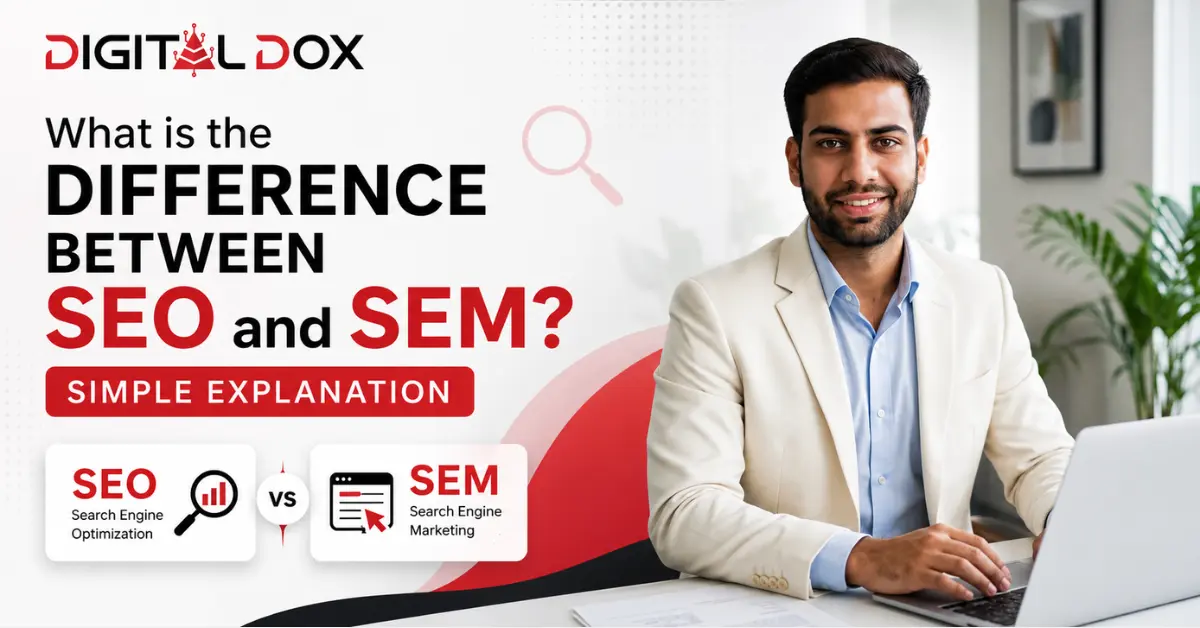
SEO stands for Search Engine Optimization. It is the process of improving your website so that it ranks higher in the organic or unpaid search results on Google and other search engines.
When someone types a query into Google, the search engine scans millions of web pages and decides which ones are most relevant and trustworthy. SEO is the work you do behind the scenes to make sure your website is one of those top results, without paying Google directly for the placement.
SEO includes three main areas:
- On-Page SEO: Optimizing content, headings, keywords, meta tags, and internal linking on your website pages.
- Off-Page SEO: Building backlinks from other websites to increase your site’s authority and credibility.
- Technical SEO: Improving site speed, mobile-friendliness, crawlability, and site structure.
The results from SEO do not appear overnight. It is a long-term investment. But once you rank well, the traffic you receive is essentially free and consistent.
What is SEM?
SEM stands for Search Engine Marketing. It refers to the practice of using paid advertisements to appear in search engine results. When you search something on Google and see results marked as Sponsored at the top or bottom of the page, those are SEM ads.
The most widely used SEM platform is Google Ads, formerly known as Google AdWords. Advertisers bid on specific keywords, and when a user searches for those terms, the ads appear in the search results. You only pay when someone actually clicks on your ad, which is why this model is called Pay-Per-Click or PPC.
SEM gives you immediate visibility. The moment your campaign is live and approved, your website can appear at the top of Google for your chosen keywords. However, this visibility stops the moment you stop spending money.
SEM typically includes:
- Google Search Ads: Text-based ads that appear in search results.
- Google Display Ads: Visual banner ads shown across websites in Google’s network.
- Google Shopping Ads: Product-based ads for e-commerce businesses.
- Remarketing Campaigns: Ads that target users who have previously visited your website.
SEO vs SEM Comparison: The Key Differences
Now that we understand each term individually, let us look at the difference between SEO and SEM side by side across several important factors.
Cost
SEO does not require you to pay the search engine for placement. You invest time, effort, and sometimes money in content creation, technical improvements, and link building. Once your pages rank, the clicks are free.
SEM requires a direct financial investment every time someone clicks your ad. Costs can vary widely depending on competition for your chosen keywords. In highly competitive industries, a single click can cost several hundred rupees or more.
Time to Results
SEO is a long-term strategy. Depending on your niche and competition level, it can take anywhere from three to twelve months to see meaningful results. This is one of the most common challenges beginners face when learning search engine optimization vs search engine marketing.
SEM delivers results almost immediately. Once your campaign is approved by Google, your ads can start appearing within hours. This makes SEM ideal for businesses that need fast traffic or are running time-sensitive promotions.
Longevity of Results
When you build strong SEO, the results compound over time. A well-optimised blog post or service page can continue to attract traffic for years without ongoing spending.
With SEM, the moment your budget runs out or your campaigns are paused, your visibility disappears completely. You are essentially renting space on Google, not building a long-term asset.
Click Behaviour and Trust
Research consistently shows that many users prefer to click on organic search results rather than ads. People often associate organic rankings with greater authority and trustworthiness. This is a key consideration when thinking about paid vs organic search.
However, SEM ads are highly targeted and appear at the very top of the page, which means they can still attract strong click-through rates, especially for commercial or transactional searches where users are ready to buy.
Paid vs Organic Search: How They Look on Google
When you perform a Google search, you will typically see two types of results on the page.
At the top, you will usually find a few results with a small Sponsored label. These are paid ads managed through Google Ads. Below those, you will see a list of organic results, which are websites that Google has ranked based on relevance and quality without any direct payment.
Understanding this distinction is fundamental to any SEO vs SEM comparison. Both aim to get you on that first page of Google. They just take different routes to get there.
Google Ads vs SEO: Which One Should You Learn?
This is one of the most common questions asked by students who are just getting started in digital marketing. The honest answer is that both skills are valuable, and the best digital marketers understand how to use them together.
Learning SEO will teach you how to create content that ranks, how search engines evaluate websites, and how to build long-term online authority. It is a foundational skill that every digital marketing professional should understand.
Learning Google Ads or SEM will teach you how to create and manage paid campaigns, how to do keyword bidding, how to write compelling ad copy, and how to measure return on investment. These are skills in high demand by businesses that want fast results and measurable outcomes.
At Digital Dox, our Master Digital Marketing Program covers both SEO and Google Ads in depth, with live classes, practical assignments, and real campaign experience so you graduate ready for the job market.
When to Use SEO vs SEM: Practical Decision Guide
The question of when to use SEO vs SEM depends on your goals, timeline, and budget. Here is a simple framework to guide your thinking.
Choose SEO When:
- You are building a long-term digital presence and can invest time over months.
- You have a blog, educational platform, or content-heavy website.
- Your budget is limited and you want traffic without ongoing ad spend.
- You want to build brand credibility and topical authority in your industry.
Choose SEM When:
- You need immediate traffic, leads, or sales for a new product or service.
- You are running a limited-time promotion, event, or sale.
- You are in a highly competitive niche where ranking organically is very difficult in the short term.
- You have a clear budget and want to test which keywords convert best before investing in SEO content.
Use Both Together When:
Many successful businesses use SEO and SEM simultaneously. SEM drives immediate traffic while SEO builds momentum over time. Once your organic rankings improve, you can reduce ad spend in those areas and redirect your budget to newer keywords or campaigns. This combined approach gives you both stability and speed.
SEM for Beginners: What You Need to Know First
If you are new to digital marketing and exploring SEM for beginners, here are the core concepts you should get comfortable with before diving into Google Ads.
- Keywords: The search terms you want your ads to appear for. Choosing the right keywords is the foundation of every SEM campaign.
- Quality Score: Google rates your ads and landing pages on relevance and user experience. A higher Quality Score means lower costs and better ad positions.
- Ad Rank: Determined by your bid amount multiplied by your Quality Score. It decides where your ad appears on the page.
- Click-Through Rate (CTR): The percentage of people who see your ad and click on it. A higher CTR generally means your ad is relevant and well-written.
- Conversion Rate: The percentage of people who click your ad and complete a desired action such as filling out a form or making a purchase.
If you want structured training on both SEO and SEM, our Professional Digital Marketing Program is a great starting point. It covers the fundamentals with hands-on practice from day one.
Common Misconceptions About SEO and SEM
There are a few myths around these two strategies that trip up beginners. Let us clear them up.
Myth 1: SEM helps your SEO rankings
Running Google Ads does not improve your organic search rankings. Google keeps these two systems completely separate. Paying for ads will not give you any special benefit in the organic results.
Myth 2: SEO is completely free
While you do not pay Google for organic rankings, SEO is not free. You invest time, and often money in tools, content writers, developers, and link building. The difference is that this investment builds an asset, whereas SEM spend produces results only as long as you keep paying.
Myth 3: One is better than the other
Neither SEO nor SEM is universally superior. The right choice depends on your business situation, goals, and resources. Smart marketers know how to leverage both strategically.
SEO and SEM Skills in the Digital Marketing Job Market
If you are considering a career in digital marketing, knowing both SEO and SEM is a massive advantage. Employers and clients in India and abroad consistently look for professionals who understand the full search marketing landscape.
At Digital Dox, we train students to become job-ready digital marketing professionals. Whether you are a fresher in Delhi exploring your options or a working professional looking to upskill, we have programs designed for you. Learn more about whether digital marketing is a good career option in Delhi and what the industry looks like in 2026.
If you are still figuring out where to begin, read our detailed guide on how long it takes to learn digital marketing from scratch. It will give you a realistic roadmap for your learning journey.
Final Thoughts on the Difference Between SEO and SEM
To summarise everything in simple terms: SEO is about earning your place in Google search results through quality content, technical optimisation, and authority building. SEM is about buying your place in search results through paid advertising on platforms like Google Ads.
The difference between SEO and SEM is not just technical. It reflects a fundamental choice in how you approach online growth. Do you want to build something sustainable over time, or do you need fast, measurable results right now? In many cases, the smartest answer is both.
Understanding search engine optimization vs search engine marketing is one of the first things every digital marketer should master. Once you understand how each channel works and when to use it, you will be in a far stronger position to build online visibility for yourself or any business you work with.
Ready to take the next step? Explore our courses at Digital Dox and start building real digital marketing skills that get results.